Category: Uncategorized

We’d All Love To See the Plan

November, 2024

Dear CNN:

I greatly admire David Axelrod. I appreciate his calm assessments and his ability to present a partisan point of view in a civil manner. But the day or two after November 5 I found myself frustrated with him. I understand he is a political strategist, that it is his job to look at the components of the presidential loss in order to determine what should be done differently next time. But I was disappointed not to see a stronger acknowledgement of the real reason the Democrats lost the presidency:

Kamala Harris is a woman.

Two things up front: No, not everyone who voted for the former president is sexist. I understand there are other issues, and I’m a proponent of a strong two-party system with differing points of view. This letter is not about name-calling. It’s about questioning how the election is being assessed by the media. I’m picking on David Axelrod because he’s the one I’ve seen most often over the past few days and, as I’ve said, whom I admire greatly. However, the lack of attention to the importance of the role of gender goes beyond him and beyond CNN.

Political pundits are treating Harris’ loss the way they would have if she were a man running against the likes of George Bush or Mitt Romney. We’re told she didn’t reach out enough to [fill in your choice of demographic]. She focused too much on things like the threat to democracy rather than the price of eggs. She didn’t distance herself enough from Joe Biden. And my favorite: Democrats, many with advanced degrees and who make $200,000 a year, don’t understand the lives of those who are struggling They act like missionaries, looking down upon blue-collar workers, trying to save them.

Really?

Okay, I’ll give you the advanced degree. I have one. I’m also a never-married (sorry, no cats) 72-year-old woman who has struggled as a mass-communications professional to make an income, an income that has, in the end, allowed me to create a safe home and fulfilling life. But it wasn’t easy. I’ve never made $200,000 a year. And I didn’t know I was an uncaring elitist when I was laid off from my corporate public-affairs position and told by the placement manager that everyone in the room would be able to find a comparable job except for me. (Sadly, he was right.) Or when I found myself sitting on my bedroom floor sobbing because the client I had been depending on to pay the mortgage that month had decided it didn’t need a freelance writer anymore.

But back to the Democrats’ so-called strategic failures. Was that really enough to tip the scales? For the citizenry of the United States of America to reject the candidate who is intelligent, experienced, professional, skilled, articulate? Who treats others with respect? Who understands the role of the United States in the world? To choose instead the candidate who prevented the peaceful transfer of power for the first time in our history? (Yes, the power transferred, but the process was not peaceful.) To prefer a convicted sexual predator, who as a matter of course belittles anyone who doesn’t bow to him? Are we really proud to call as our next president someone who needed the job to avoid going to jail?

I voted for Joe Biden in the 2020 primary because I knew he was highly experienced. But I also knew that with another four years of Donald Trump on the table, the stakes were too high to risk running a woman. In 2024, with the talk of asking Joe Biden to step aside, I worried about the alternative and kept quoting John Lennon—“We’d all love to see the plan.” But then, Kamala Harris became the nominee, and the enthusiasm was electric. I thought, okay, we’re ready.

I was a fool.

From FDR’s refusal to be photographed getting into his wheelchair to JFK’s acknowledged affairs, men don’t have to be perfect. But Hillary Clinton, probably the most highly qualified person to ever run for president, was considered to be a bit too pushy. Barack Obama is black and faces racism, but he is a man. We gave him two terms. Kamala Harris is being told she didn’t massage egos or hold peoples’ hands, and so she didn’t earn the presidency.

What’s the variable?

By all mean, democratic strategists, do your job. Look at the map. Get into the minutia. Figure out which groups to approach differently next time.

But, please, dispense with the “if onlys.” The variable that tipped the scales is that the American citizenry can’t picture a woman in the Oval Office. Let us know when you have a strategic solution to that.

We’d all love to see the plan.

Sincerely,

Elaine L. Ricci

Cc.

Vice President Kamala Harris

MSNBC

Jon Stewart

My blog: https://bumpsscrapesandkisses.blog/

Anyone else who will listen

© Elaine L. Ricci 2024. This document may be reproduced in whole or in part provided it is credited to Elaine L. Ricci.
What Is Our Collective Civic IQ?

What Is Our Collective Civic IQ?

June 2020

In 2008, then-senator Barack Obama won Massachusetts by almost 26 points. Theoretically, that was a clear mandate that the voters in the commonwealth supported his platform. A little over a year later in a special election to fill Senator Ted Kennedy’s seat, Massachusetts elected Republican Scott Brown. By doing so, hopes that the Democrats would retain the super majority in the Senate, giving them a filibuster-proof road to implementing their agenda, were dashed.

Why the change of heart? Disillusionment with an administration that had barely gotten its feet wet? Annoyance with the Democratic candidate, Martha Coakley, and her perceived indifference to voters? An idea, once valid but in the current environment unworkable, that a team of rivals would produce good government? Even accepting those rationales, did the people who voted for Barack Obama and then for Scott Brown consider the contradiction of their votes? Put another way: what is our collective civic IQ?

Democracy requires intelligent participation. And yet, so often decisions that determine our government are driven by emotion. Fortified by incendiary rhetoric and catch phrases that can be turned into anger-inciting memes, our political discourse serves not to enlighten but to obfuscate. That may make for an evening’s entertainment, but it’s no way to form a government.

It seems to me, in order to meet our responsibility as citizens, we need to come to terms with our role in five categories:

  • Understanding Issues
  • Knowing How Government Works
  • Recognizing Instruments of Persuasion
  • Reconciling Self Interest With National Interest
  • Considering Character and Temperament

Understanding Issues

During the 2016 Presidential Election I printed out the Democratic and Republican party platforms with the intention of reading both at my leisure. I have to say I didn’t get very far. The great American Novel they are not. It takes a certain amount of effort to truly understand issues, and, with everything else we all have to contend with, the task can seem overwhelming. Perhaps the advice of someone who teaches for a living would be helpful. Walter Johnson, a high-school teacher in the Boston area, developed a class for his seniors called Contemporary Issues in the Social Sciences. The course focused on current issues in politics, economics, science, religion and cultural trends. He recommends voters choose a list of five issues that are important to them, then do the research and see where the candidates stand.

There are plenty of resources available, particularly around election time, that provide succinct information about the issues. It’s up to us to seek them out. Johnson’s students were required to read the magazine The Week. He said he chose this publication because, while the pieces are short, “they provide students with an opportunity to explore alternate perspectives, both liberal and conservative, by leading them to articles in other publications with often distinct points of view. It challenges them to think about how they are formulating their opinions.” (Check your local library’s website to see if they offer The Week online.)

Knowing How Government Works

The Annenberg Public Policy Center of the University of Pennsylvania conducts an annual survey about the understanding of the Constitution of the United States. In 2019, the survey revealed that only 39 percent of Americans were able to name all three branches of government, and that was the highest level in five years of the survey.1

Does every voter need a lawyer’s familiarity with the Constitution? No. But let’s return to the Obama/Brown example. It’s one thing to be in favor of health care for all. But if voters weren’t aware that their votes for Scott Brown would have taken away the super majority that would have given President Obama a powerful tool in making his vision a reality, they weren’t working with complete information. Particularly during an election season it’s important to pay attention, not just to the ideal, but also to the mechanics.

Navigating the Information Highway

One would think with the way we’re inundated with communication during presidential campaigns that obtaining an understanding of issues and candidates would be easy. But the opposite is true. Cable news needs to fill 24 hours of ratings-generating material. Objectivity is constantly threatened and sometimes abandoned. Social media is littered with uninformed opinions not to mention foreign bots. But most dangerously, our politics are highly charged, and the information we receive is often designed to appeal to our emotions rather than reason.

Misinformation and outrageous campaign tactics have been part of our political life throughout our history. Here are just two examples:

  • During the election of 1800 between John Adams and Thomas Jefferson, “Adams was labeled a fool, a hypocrite, a criminal, and a tyrant, while Jefferson was branded a weakling, an atheist, a libertine, and a coward.”2
  • “Led by newspaper owners William Randolph Hearst and Joseph Pulitzer, journalism of the 1890s used melodrama, romance, and hyperbole to sell millions of newspapers–a style that became known as yellow journalism.”3

What is new is the speed at which information travels. A statement on social media is immediate. It is not vetted through an editor and yet is often accepted as true simply because we can read it on our screens. “Much of the information people are getting is coming from Facebook and Twitter,” Johnson said. “Even those who are watching cable don’t get a clear presentation of the news. The bias that exists is clear. Opinions are reinforced based on the network they choose to watch.”

In this environment, we cannot afford to accept information at face value. We have to ask ourselves: Where did this information come from? What is the agenda of the person or organization providing it? Can I verify the content with another source?

Reconciling Self Interest With National Interest

One of the most challenging tasks for us as voters is to reconcile our self interest with the interest of our country. No one likes paying taxes, but the safety net they support creates a more compassionate society. Maybe government regulation makes business operations more cumbersome, but should an unscrupulous business have the power to take advantage of a community? These are issues each of us has to consider, and we can certainly disagree about how to approach them. But at the very least, we should make decisions regarding them as informed citizens with as complete a knowledge as possible of their ramifications.

Considering Character and Temperament

I spent the first part of this essay writing about the importance of casting a vote based on issues not emotions. And I stand by that premise. But what happens when voting for the issues we believe in means giving power to someone whose character or temperament ill equips that person to lead? This isn’t quite the same as choosing between self interest and the interest of the country because we believe judges’ appointments, tax policy, environmental regulations serve the country better when put in the hands of the party we support. But if the result is abuse of power or damage to the fabric of our nation, what do we do? Citizenship, done well, is not easy.

We the People

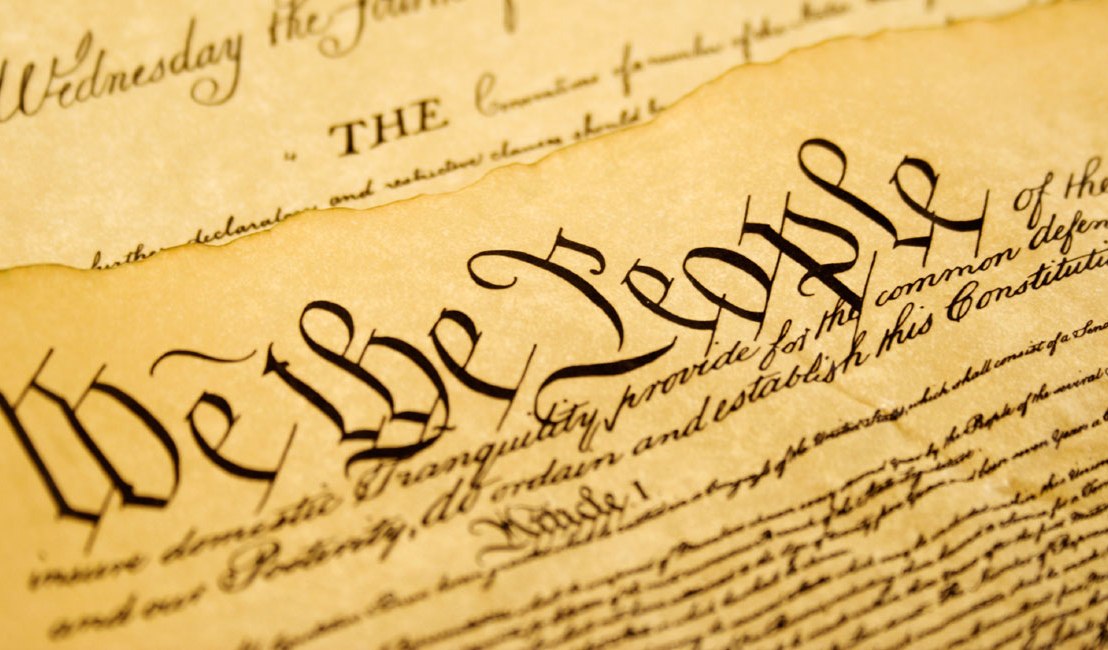
We are coming into what is likely to be one of the most volatile campaign periods in our history. Perhaps as individuals we can’t do much to prevent the disintegration of our electoral process into a morass of misinformation and malintent. But this is our democracy. We the People are the first words of the constitution. Not We the Congress, not We the Judges and certainly not I the President. We owe it to ourselves to cut through the noise so that we may truly understand the ramifications of our votes. We owe it to ourselves to raise the level of our collective civic IQ.

I know no safe depository of the ultimate powers of the society but the people themselves; and if we think them not enlightened enough to exercise their control with a wholesome discretion, the remedy is not to take it from them, but to inform their discretion by education. This is the true corrective of abuses of constitutional power.

Thomas Jefferson 4

1 Annenberg Public Policy Centerof the University of Pennsylvania Annenberg Civics Knowledge Survey https://www.annenbergpublicpolicycenter.org/political-communication/civics-knowledge-survey/

2 Adams vs. Jefferson: The Birth of Negative Campaigning in the U.S. https://www.mentalfloss.com/article/12487/adams-vs-jefferson-birth-negative-campaigning-us

3 Crucible of Empire, The Spanish American War, Yellow Journalism https://www.pbs.org/crucible/frames/_journalism.html

4  Letter From Thomas Jefferson to William Charles Jarvis, 28 September 1820 https://founders.archives.gov/documents/Jefferson/98-01-02-1540

©Elaine L. Ricci 2020

Faith Is Not Magic

Ego. That’s the only word I have for it, for the so-called religious leaders that are gathering their congregations against the advice of medical professionals and the orders of governmental leaders doing their best to contain COVID-19. Ego, the word for those setting up the false choice of “faith over fear.”

To those people I say, your belief in a greater power does not immunize you from the consequences—to yourself and the people you lead—of your reckless behavior. Faith does not endow you with superpowers. Faith is not a shield from the frailties of being human. Faith is not magic.

I’m a practicing Catholic, although I struggle with my faith. If I were to be offered the protection of a personal patron saint, I would choose St. Thomas. Doubting Thomas, whom, I’ve always felt, gets a bad rap. The other apostles are present when Christ, risen from the dead, appears in the locked room. They don’t need faith. Poor Thomas, because he understandably demands proof, is chastised for not having faith. But it is Thomas who reminds us that one of God’s gifts is common sense. It is Thomas who warns us to doubt the charlatans that plague every generation. Thomas demonstrates for us the importance of questioning, and it is questioning that leads to understanding.

So I admit to not really knowing what faith is. The definition I think of most often is that faith is belief in that which can’t be seen. But how do we choose which of what can’t be seen we should believe in? Because lots of things masquerade as faith: indoctrination, superstition, wishful thinking, fear.

The definition I hold on to is from a line in a television show from the late 1990s that the Catholic Church—well, maybe not the whole Church but someone within it—disapproved of. It is about an urban priest who, living in the messy real world, bends the rules a bit. A young religious sister brings her questions about faith to an older, and one assumes wiser, sister. The older sister says. “Faith is going forward one step at a time as if it were true.” And that’s the best I can do.

But back to these people who seem to think they have a direct line to God and therefore will be protected from COVID-19. I’ve got news for you: You’re not that special. Does God protect us? If so, why is there pain in the world? It’s a question as old as belief itself. If theologians throughout time haven’t be able to figure it out, who am I to try? In a recent opinion piece in the New York Times, Fr. James Martin, a Jesuit priest and editor-at-large of America Magazine said: “In the end, the most honest answer to the question of why the Covid-19 virus is killing thousands of people, why infectious diseases ravage humanity and why there is suffering at all is: We don’t know. For me, this is the most honest and accurate answer.”

So no, you’re not going to find the answers to the mysteries of the Almighty here. But I do have a personal opinion about how God protects us:

  • God protects us by giving us the good sense to know we need to listen to the medical professionals guiding us.
  • God protects us by bestowing upon medical professionals the gifts that allow them to treat us.
  • God protects us by instilling in the 40,000 retired doctors and nurses who answered Governor Cuomo’s call a sense of commitment and responsibility that has them putting themselves at risk to help others.
  • God protects us by giving pharmacists the skills to provide medication that prolongs our lives and grocery-store owners the ability to manage a supply chain under duress because of public demand.
  • God protects us by giving to those people who are delivering our medications and groceries the courage to venture out into a scary world so that more of us don’t have to.

St. Teresa of Ávila said, “Christ has no body now but yours. No hands, no feet on earth but yours. Yours are the eyes through which he looks compassion on this world.”

God protects us by giving us all whatever gifts we have to support one another. Those who, in the name of faith, are defying the medical professionals and governmental authorities working so hard to manage this crisis are dismissing the value of God’s gifts.

I may not know exactly what faith is, but I do know what it is not: Faith is not magic. Treating it as such is dangerous.

©Elaine L. Ricci 2020


We Are the “We” in “We the People”

We Are the “We” in “We the People”

June 28, 2017

Today I called the Congressional Budget Office (202-224-4515); Senator Elizabeth Warren (202-224-4543); Senator Ed Markey (202-224-2742); Congressman Seth Moulton (978) 531-1669); and Senator Susan Collins (202-224-2523) to register my opinion that we must have hearings on the Senate Health Care bill.

To the Massachusetts Delegation, I said that I know I’m preaching to the choir, but that I also know they track calls, and I want my voice to be heard. To Senator Collins, who does not represent me directly, I said that I have always appreciated her rational approach and that we need hearings.

We are, of course, right to focus on the larger threats to our democracy, like Russian interference. However, we cannot ignore what are easy to see as mundane administration issues, like whether or not there are hearings, or whether the White House press briefings are on camera. Process matters. We ignore it at our peril. Bypassing the people by shutting out our voices or limiting our access is a major step in the deterioration of process that will, ultimately, destroy our democracy.

I used to think that, because I’m a Democrat living in Massachusetts, I didn’t have to contact my representatives, who are all Democrats. But that’s just not true anymore. Every day I see what perhaps seem like small steps leading toward the weakening of our democracy, whether it’s the rushing through of legislation that dramatically affects people’s lives without hearings, a tweet from the president that attempts to delegitimize the media, a lecture from the White House assistant press secretary to the press corps dismissing their work as fake or the promotion of alternative facts as reality. It is a drip, drip, drip towards a future that is less government by the people and more government by those who have enough power to dismiss the people.

We are the “We” in “We the People.” Let’s make our voices heard.

(c) 2017 Elaine L. Ricci